
Architectural and Textile Transparency — From SANAA’s Glass to Dior’s Veils
Updated: Oct 11, 2025
The Promise of Transparency
Whether in SANAA’s fluid glass architectures or Dior’s diaphanous veils, transparency runs through art, fashion, and design like a quiet manifesto. It unfolds as an architectural and textile transparency, linking dreams of glass to the soft whispers of fabric.
For Kazuyo Sejima and Ryue Nishizawa, founders of the SANAA studio, glass is never just a wall: it dissolves boundaries, blurs the line between inside and out, and transforms light into substance itself. The Rolex Learning Center in Lausanne or the New Museum in New York have become its icons.
In fashion, Maria Grazia Chiuri, artistic director of Dior until May 2025, explored the same vocabulary through dresses of tulle, organza, and lace. More than garments, her creations became architectures of the body, playing with revelation and suggestion.
Two disciplines, two scales, one shared obsession: to give shape to the invisible, to inhabit the in-between. Transparency, far from absence, becomes a fragile density, the elegance of almost nothing.

Dior Haute Couture S/S 2024 - transparency in motion, turquoise and silver embroidery on sheer tulle
SANAA – Transparency and Light
At SANAA, transparency is never an effect but an atmosphere. Since the late 1990s, Sejima and Nishizawa have crafted an architectural language where glass becomes a veil—a mediator rather than a showcase.
The Rolex Learning Center (2010) embodies this radical softness: an undulating expanse punctuated by patios, wrapped in glass walls that dissolve the threshold between indoors and outdoors. Transparency here does not divide—it connects.
In New York, the New Museum (2007) takes another path: stacked volumes sheathed in a translucent skin. Far from the glass skyscraper flaunting its innards, SANAA opts for discretion. The façade filters the gaze rather than imposing it.
With Grace Farms (2015) in Connecticut, their language verges on invisibility: a ribbon of glass meanders across the hills. The architecture adds nothing; it blends seamlessly into the landscape.
Across these projects, architectural transparency becomes an aesthetic of near-nothingness: a way to let space breathe, to offer the eye more air than matter.
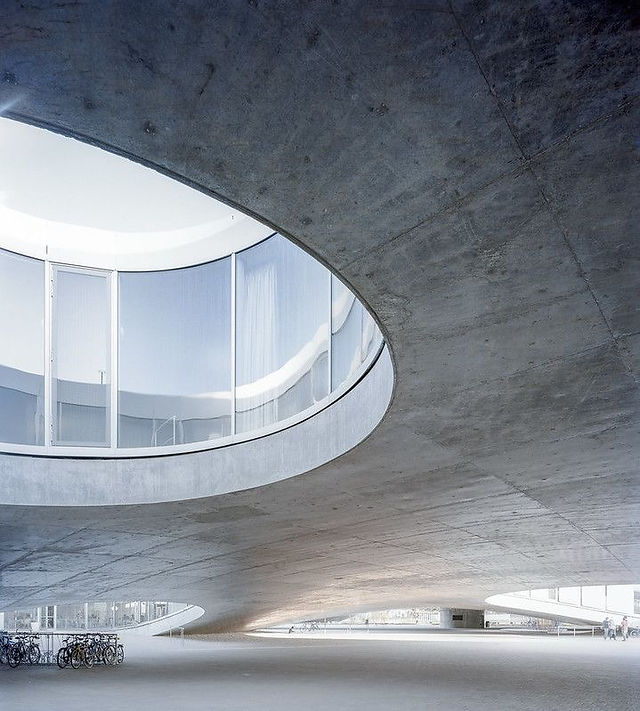
Rolex Center, SANAA - under the concrete waves, light becomes architecture. 
La Samaritaine, SANAA - a rippling glass veil where Paris reflects and distorts
Dior – Veils as Manifesto
If SANAA inhabits the landscape, Dior inhabits the body. Maria Grazia Chiuri, who led the house from 2016 to 2025, made textile transparency one of her most striking signatures.
From her very first show in 2016, she used tulle and organza as a language. Silhouettes revealed glimpses of skin beneath layered fabrics, privileging suggestion over exhibition.
Her haute couture 2020 and spring-summer 2023 collections are defining examples: diaphanous gowns, ethereal lace, fabrics drifting like mist around the body. Transparency here becomes intimate architecture, an embodied space of freedom.
This aesthetic, far from decorative, is political. It questions the gaze cast upon the female body and asserts the right to appear without being fully unveiled. As Chiuri explained in several interviews, “fashion must be a language of emancipation.”
These fragile veils protect as much as they reveal. They inscribe clothing into a historical continuum where couture itself becomes a manifesto. In this, Dior joins other creators (Junya Watanabe, Maison Margiela) yet preserves a deeply feminist and engaged dimension. This gesture belongs fully to an architectural and textile transparency that crosses the boundaries between buildings and garments.

Dior Haute Couture S/S 2024 - silver embroidery and ivory tulle in weightless balance. 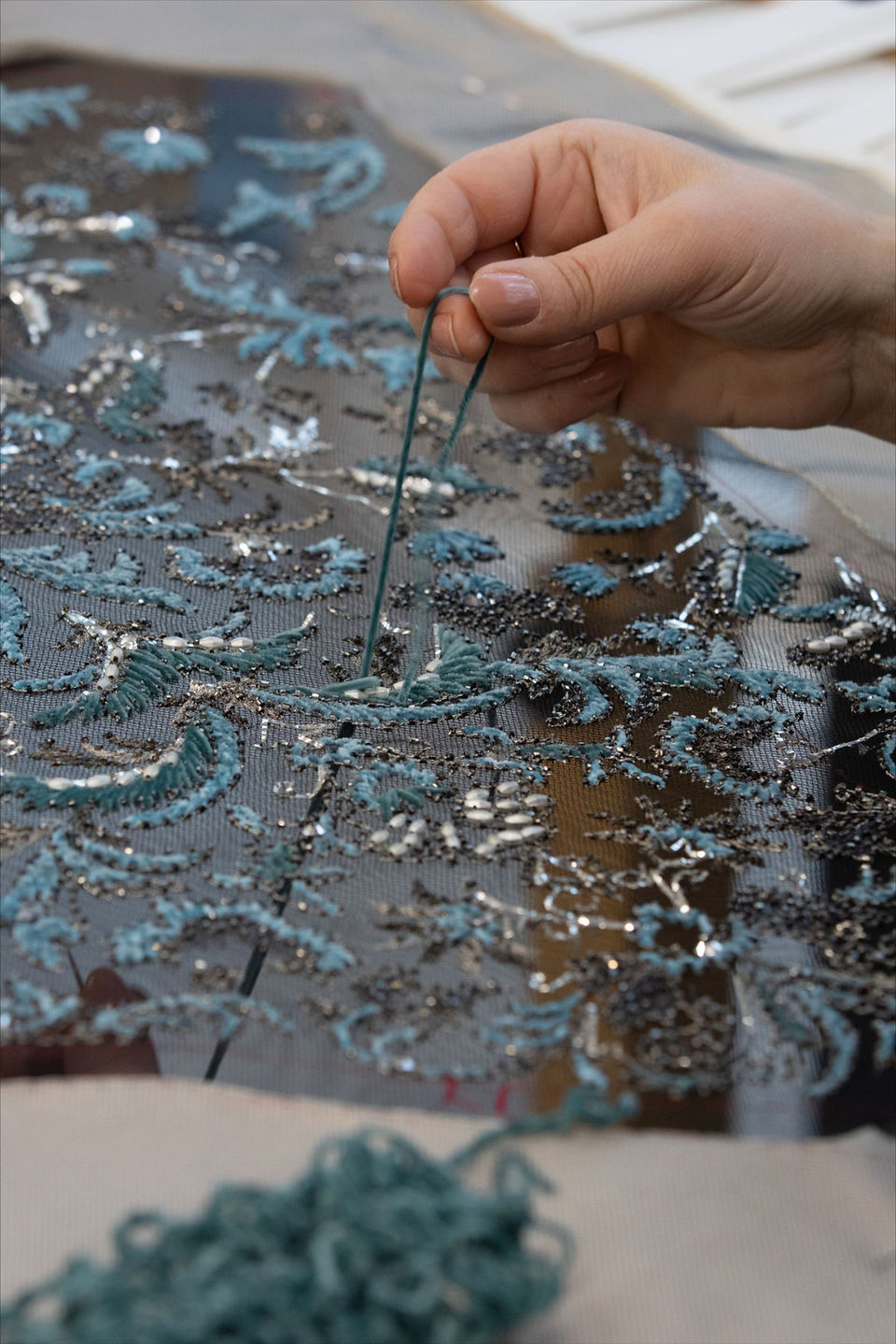
Dior SS24 - transparency and shimmer, turquoise and silver embroidery. 
Dior Cruise 2025 - silver embroidery and talismanic jewels on sheer couture. 
Dior in Cannes - a pleated sculpture between couture and architecture.
Transparency as a Shared Language
Whether in SANAA’s glass or Dior’s veils, architectural and textile transparency acts as a zone of tension. It does not simply display: it reveals in fragments, it constructs a space where the gaze may wander but never fully possess.
In both architecture and fashion, this aesthetic opens onto a universal question: how can the invisible be given form, how can the in-between be inhabited?
SANAA dissolves walls to let the landscape in. Dior layers veils to redefine the presence of the body. Both work with thresholds, with intervals—those fragile places where absence becomes material.

Dior FW25 - lace sculpted in light, between transparency and structure. 
The New Museum, SANAA - floating white boxes stacked above Bowery.
The Elegance of the In-Between
Transparency (whether of glass or fabric) is never neutral. It fashions subtle spaces where the visible and the invisible meet. This gesture moves through an architectural and textile transparency, oscillating between the imperceptible and the manifest.
At SANAA, it creates landscapes of air and light. At Dior, it sculpts ephemeral architectures of the body.
In both, it embodies the elegance of almost nothing: a beauty held in the unstable balance between showing and suggesting, between revealing and protecting. An aesthetic that, beyond architecture and fashion, today inspires design, contemporary art, and even the ways we inhabit our own lives.

SANAA – Grace Farms, a glass ribbon that vanishes into the landscape.
Credits : SANAA, Christian Dior


