
Creating Without Showing — Restraint in Contemporary Creative Practice

Textiles in production, shaped by use and long duration.
Credits: Tekla
Withdrawal as a Subtle Signal in Contemporary Creative Practice
There is today a discreet phenomenon, almost imperceptible. Against the constant visual agitation and perpetual self-staging, some creators are choosing to slow down. To step back slightly. To reduce their exposure.
This is neither a frontal rejection nor a refusal of contemporary tools. Rather, it is a measured response to the excess of images, commentary, and visible performance that permeates contemporary creation.
In a world where everything seems required to be shown, explained, shared, withdrawal becomes a singular position. A silent choice. And perhaps, another way of existing.

A functional object designed for everyday use. 
Repetitive gesture at the core of the craft process. 
Material shaped slowly, before the finished object.
Credits: Sori Yanagi
The Exhaustion of the Spectacle in Contemporary Creation
For a long time, contemporary creation asserted itself through demonstration. Strong forms. Legible gestures. Objects designed to impose themselves immediately.
Visibility was synonymous with audacity, sometimes even with modernity. But through constant solicitation, the image became saturated. The spectacular repeated itself, until it became predictable.
Gradually, attention shifted. Objects began to exist more for what they showed than for what they allowed to be lived. Experience flattened in favour of representation.
This first movement of withdrawal often emerges from a deep fatigue.
A fatigue with permanent visibility
With the need to explain every intention. With producing visibility before producing meaning. With creating under a constant gaze.
In this context, withdrawal is not a radical posture. It is a measured response to the wear of spectacle in contemporary creation.

A deliberately blurred presence, between disappearance and continuity. 
Material before the object, deliberately left unfinished.
Credits: Mia Duong, Hasami Porcelain
Returning to Gesture, Time, and Process
In response, some creators shift their focus. They no longer work for the image, but for the gesture. For duration. For repetition, adjustment, sometimes even imperfection.
The creative process regains its central place, not as discourse, but as daily practice. What matters is no longer only the finished object, but the accumulation of silent decisions that made it possible.
In certain studios, in certain spaces, nothing is designed to be photographed. Light is not forced. Materials do not seek to seduce. Work advances without urgency for dissemination.
The Creative Process as a Space of Resistance
This shift is rarely spectacular. It is discreet, sometimes invisible. Yet it profoundly transforms the way contemporary creation unfolds.

Material accompanying the body, without demonstrative intent. 
A space conceived for light, material, and calm. 
A retail space conceived as a place of withdrawal. 
A fashion language shaped by erasure and continuity.
Credits: OJ Studio, Migdal Studio, The Row
Creating without an audience
Without anticipating immediate reception. Without measuring each gesture against feedback, algorithms, or external validation.
This choice is anything but passive. It requires deep trust in the work itself. An acceptance of a form of relative anonymity. A willingness to let time do its work.
The absence of immediate audience becomes a condition of sincerity. Not because visibility is a problem in itself, but because creation ceases to be oriented by it.
The work exists first for what it is, before existing for what it shows.
Restraint as a New Marker of Contemporary High-End Creation
In this context, luxury changes its language. It is no longer defined by ostentation or visible rarity, but by restraint, precision, and economy of means.
In contemporary creation, the high-end no longer needs to convince. It does not seek immediate adherence. It is recognised in detail, in use, in what cannot always be explained.
Recognition Through Time Rather Than Exposure
When recognition arrives, it does not come from forced visibility. It is built over time. Through peers. Through experience. Through silent trust.

Everyday objects designed for use and longevity. 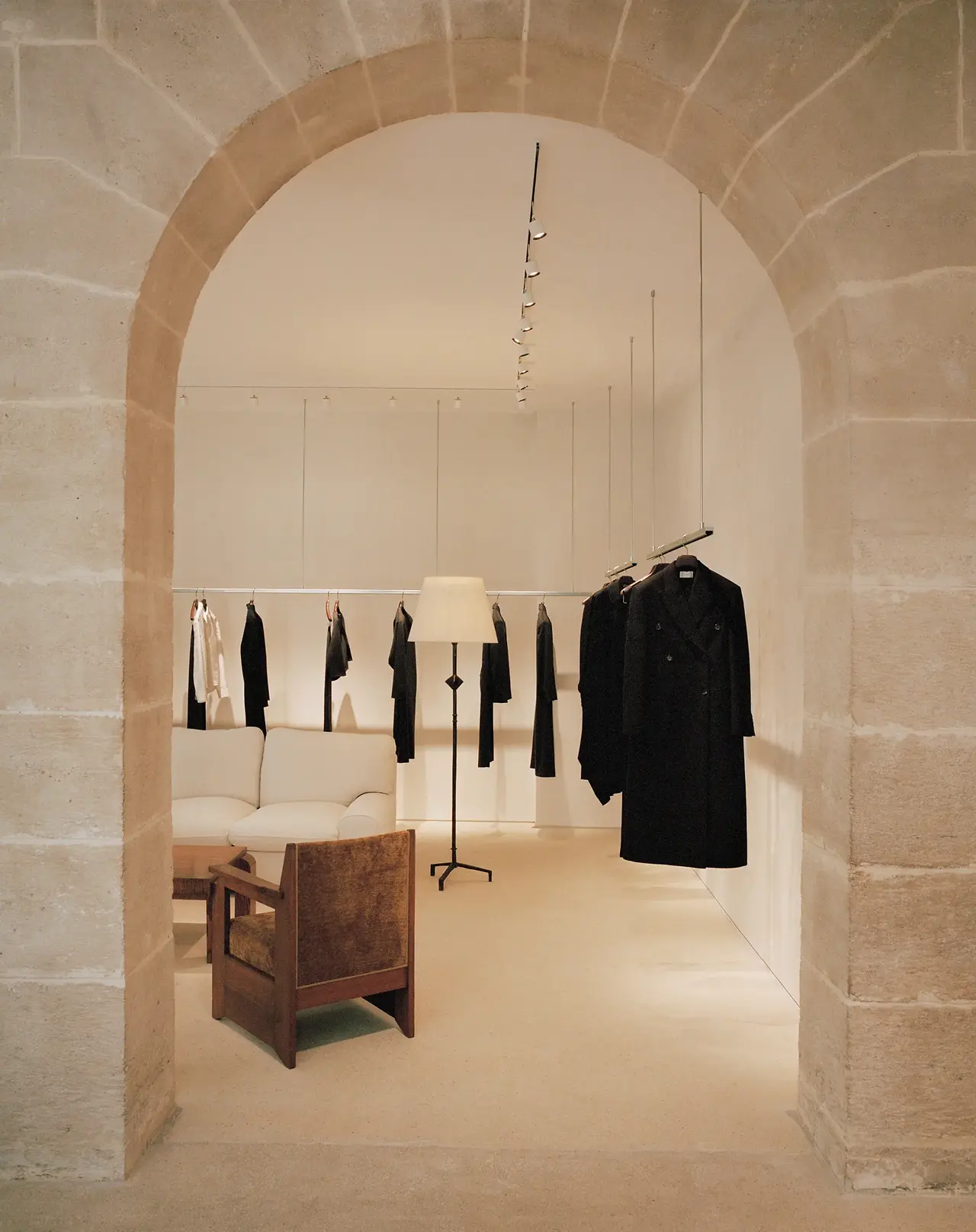
A space designed to slow down and observe.
Credits: Hasami Porcelain, The Row
What This Withdrawal Reveals About Contemporary Creation Today
This movement is neither a trend nor an identifiable style. It cuts across disciplines, rhythms, and practices.
It reflects a broader need: to slow down,to recover attention, to restore to creation a space for reflection rather than performance.
In an era where visibility seems almost compulsory, withdrawal appears as a form of soft resistance. A calm but deliberate refusal. A way of reclaiming one’s time, one’s gesture, one’s place.

A garment reduced to its essential form, without superfluous narrative.
Credits: John Pawson
Silence as Creative Commitment
Withdrawing does not mean disappearing. It is choosing a different way of being present. A different rhythm. A different degree of exposure.
In a culture obsessed with visibility, restraint becomes a conscious act. A discreet but demanding commitment.
And perhaps today, one of the most intense forms of contemporary creation.


